


Black Expat Relocation Guide: Moving Abroad as a Black American
Black Expat Relocation Guide: Moving Abroad as a Black American
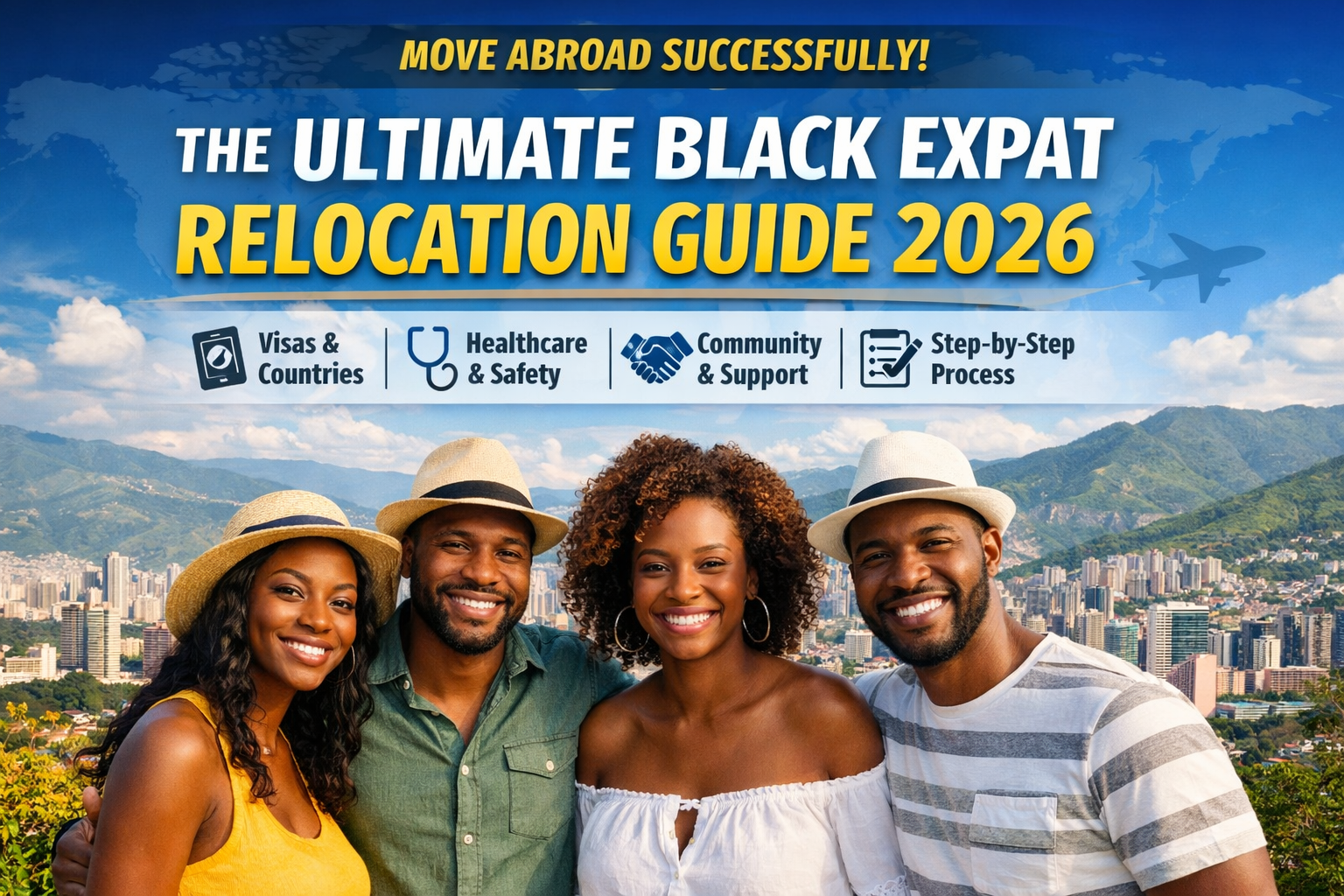
Moving abroad is no longer a fantasy for Black Americans it’s becoming a strategic lifestyle decision. Rising living costs, burnout, healthcare concerns, and the search for cultural belonging have pushed thousands to explore life beyond U.S. borders.
But relocating internationally as a Black American involves unique considerations that generic expat guides rarely address. From racial dynamics to finding community, visa access, healthcare quality, and cultural integration, your planning must be intentional.
This guide walks you through exactly how to relocate abroad as a Black expat, covering the most important decisions, realistic expectations, and actionable steps — without fluff or travel-blog hype.
Why More Black Americans Are Moving Abroad
The surge in Black American expatriation is driven by practical and emotional factors — not just wanderlust.
Financial Breathing Room
Many popular expat destinations offer dramatically lower living costs while maintaining strong infrastructure. Rent, healthcare, food, and transportation can drop by 40–70%, allowing professionals, retirees, and remote workers to build savings while improving lifestyle quality.
The shift is less about escaping the U.S. and more about reclaiming economic flexibility.
Mental and Social Wellbeing
While no country is free from bias, many Black expats report reduced day-to-day racial stress compared to the U.S. environment. Experiences vary, but the absence of constant vigilance around policing, profiling, or microaggressions can improve mental wellbeing.
This is often described as a feeling of social ease — being perceived first as a foreigner rather than through domestic racial frameworks.
Diaspora Connection
Relocating abroad frequently opens doors to Afro-descendant cultures that share historical roots. Latin America, Africa, and parts of Europe contain vibrant Black communities where cultural exchange deepens identity and perspective.
The move becomes not just geographic — but personal.
Best Countries for Black Expats
The best destination is not simply the cheapest — it’s where affordability, safety, infrastructure, community, and immigration access intersect.
Colombia
Colombia has become a leading destination for Black expats because it balances cost, healthcare quality, visa flexibility, and Afro-descendant cultural presence.
Cities like Medellín and Cartagena offer modern amenities, strong expat networks, and healthcare systems ranked among the best in Latin America. Spanish helps daily life, but many expats transition gradually.
Why Colombia works:
- Affordable modern housing
- Accessible long-term visas
- Established Black expat networks
- High-quality private healthcare
Mexico
Mexico remains one of the easiest transitions for Americans due to proximity, cultural familiarity, and strong expat infrastructure.
Beach towns and major cities host thriving Black expat communities, and residency pathways are straightforward for those with income or savings.
Mexico is ideal for:
- Remote workers
- Retirees
- Families seeking gradual relocation
Panama
Panama appeals to expats prioritizing stability and simplicity. The Pensionado visa program is one of the most accessible residency paths globally.
Infrastructure resembles North American standards, and English is widely used in expat circles.
South Africa
Cape Town attracts Black Americans seeking connection to the African continent alongside strong lifestyle appeal. English is dominant, and natural beauty is unmatched.
However, economic disparities and security awareness require informed neighborhood selection.
Visa Pathways: How Black Americans Stay Long-Term Abroad
Immigration is the foundation of a successful relocation. Tourist stays are temporary — long-term planning matters.
Digital Nomad Residency
Designed for remote earners, these visas require documented income and allow legal residence without local employment. They are popular among freelancers and remote professionals.
Retirement or Income Residency
Despite the name, these visas typically require proof of stable income rather than age restrictions. They provide long-term residence with minimal bureaucracy.
Investment Residency
For those with capital, property or business investment can fast-track permanent residency options.
Family or Marriage Residency
Spousal or partnership visas remain one of the most stable pathways when applicable.
Choosing the correct visa early prevents overstays, stress, and relocation setbacks.
Cost of Living Abroad vs the United States
One of the strongest motivators for relocating abroad is economic efficiency.
Housing, healthcare, groceries, transportation, and leisure activities are consistently lower in popular expat destinations. Many Black expats report:
- Larger living spaces
- Reduced financial anxiety
- Ability to save aggressively
- Improved lifestyle balance
Lower cost does not equal lower quality — modern infrastructure and private healthcare systems rival U.S. standards in many cities.
The key is aligning your income model with destination realities before moving.
Healthcare Abroad: What Black Expats Should Expect
Healthcare quality is a frequent concern — often based on outdated assumptions.
Countries attracting expats invest heavily in private healthcare systems that provide:
- Short wait times
- English-speaking providers
- Transparent pricing
- Modern facilities
Costs are dramatically lower than U.S. equivalents, even without insurance.
Many Black expats report more attentive provider interactions, though cultural expectations differ by country.
Before relocating:
- Research insurance eligibility
- Understand public vs private systems
- Bring medical documentation
- Secure initial travel coverage
Building Community as a Black Expat
Isolation is one of the biggest early relocation risks — but it’s avoidable.
Major expat hubs host organized Black communities offering:
- Social meetups
- Housing referrals
- Professional networking
- Emotional support
Community accelerates integration, reduces homesickness, and provides cultural familiarity.
Successful expats prioritize social connection immediately rather than waiting to “settle in.”
Cultural and Safety Realities Abroad
No country is perfect — but cultural context changes the lived experience of race.
Black expats often encounter curiosity rather than hostility, though colorism and historical bias exist globally. Understanding local dynamics prevents misinterpretation.
Practical safety habits matter more than nationality:
- Choose neighborhoods carefully
- Learn local norms
- Avoid displaying wealth
- Respect cultural etiquette
Integration improves safety and social acceptance.
The Practical Relocation Process
Relocation succeeds when treated as a project, not an impulse decision.
Preparation Phase
Research destinations, evaluate income stability, and build savings. Visit before committing whenever possible.
Documentation Phase
Secure passports, apostilled records, income proof, and medical documents well in advance.
Transition Phase
Arrive with temporary housing, local connectivity, and realistic expectations.
Integration Phase
Focus on language learning, social networks, and bureaucratic registration.
Consistency — not speed — creates stability.
Common Challenges Black Expats Face — and How to Solve Them
Relocation stress is predictable and manageable.
Homesickness fades through routine and connection.
Language barriers dissolve with structured learning.
Visa anxiety disappears with proper planning.
Financial insecurity is prevented by diversified income.
Each challenge has solutions — preparation transforms obstacles into transitions.
Is Moving Abroad Right for You?
Relocation is not escapism — it’s a lifestyle strategy. It requires discipline, adaptability, and clarity of purpose.
Black expats who thrive abroad approach the move as:
- A financial reset
- A cultural expansion
- A personal growth decision
If you value autonomy, lifestyle design, and global perspective, international living may align with your goals.
Final Thoughts
Thousands of Black Americans are successfully building lives abroad — not because it’s trendy, but because it offers tangible improvements in cost, wellbeing, and freedom.
Moving abroad is not about leaving something behind.
It’s about stepping toward a version of life that fits you better.
The path is real. The opportunity is real.
And with the right preparation, it’s entirely achievable.