
- 6 Steps To Move Abroad
- Virtual & Physical Tours
- Relocation Consultation
- Relocation In a Box
- The Nomad Navigator | Total Digital Nomad Relocation
- The Immersion Journey | Student Visa & Language Program
- The Family Odyssey | Family Relocation Package
- The Golden Years Gateway | Total Relocation Package
- The Veteran’s Vantage | Total Relocation Package
- The Legacy Investor | Total Relocation Package
- The Founder’s Launchpad | Short-Term Entrepreneur Visa Package
- The Empire Builder | Total Relocation Package
- Contact Mood

- 6 Steps To Move Abroad
- Virtual & Physical Tours
- Relocation Consultation
- Relocation In a Box
- The Nomad Navigator | Total Digital Nomad Relocation
- The Immersion Journey | Student Visa & Language Program
- The Family Odyssey | Family Relocation Package
- The Golden Years Gateway | Total Relocation Package
- The Veteran’s Vantage | Total Relocation Package
- The Legacy Investor | Total Relocation Package
- The Founder’s Launchpad | Short-Term Entrepreneur Visa Package
- The Empire Builder | Total Relocation Package
- Contact Mood
- MOOD Travel Abroad City Guides:
- Cartagena, Colombia Guide
- Cape Town, South Africa Guide
- Puerto Vallarta, Mexico Guide
- Medellín, Colombia Guide
- Playa Del Carmen, Mexico Guide
- Santa Marta, Colombia Guide
- Panama City, Panama guide
- Hua Hin, Thailand Guide
- Chiang Mai, Thailand Guide
- Bangkok, Thailand Guide
- Thailand Expat Relocation Guide
- Phuket, Thailand Guide
- Pattaya, Thailand Guide
- Koh Samui, Thailand Guide
- MOOD Travel Abroad Resources
- Guide to Visa Types for US Citizens Abroad
- Available Visas for Foreigners in Thailand
- Cultural Adaptation and Integration
- Essential Apps for Your Life Abroad
- Investing Abroad as a Foreigner
- Banking & Finance Resources
- A Realistic Packing List to Move Abroad: The Ultimate Downsizing Checklist
- The 3 V’s: Vision, Visas & Vitals: How to Narrow Down Your Expat Destination
- MOOD Travel Abroad’s Expat Financial Tool Kit: Expat Banking 101
- The Intentional Exploration Checklist: Unlock the Power of Travel to Transform Your Life
- MOOD Travel Abroad’s Universal Visa Document Checklist
- Best neighborhoods for Expats
- Cali, Colombia Neighborhoods
- Puerto Vallarta Neighborhood Guide
- Playa Del Carmen Neighborhoods
- Cape Town Neighborhoods
- Best Panama City Neighborhoods for Expats
- Santa Marta Neighborhoods: Rodadero, Taganga & Bello Horizonte
- Cartagena Neighborhoods
- Medellin Neighborhoods
- Hua Hin Neighborhoods
- Chiang Mai Neighborhoods
- Bangkok Neighborhoods
- Best Neighborhoods for Expats in Phuket
- Pattaya Neighborhoods for Expats
- Koh Samui Neighborhoods for Expats
- Navigating Healthcare Options
- The Cost of Living / Local Currency info
- The Real Cost of Living in Cali Colombia
- The Real Cost of Living in Puerto Vallarta, Mexico
- Cost of Living in Colombia (Medellín, Santa Marta, Cartagena)
- Cost of Living in Mexico (Playa Del Carmen, Mérida)
- Cape Town Cost of Living & Local Currency Guide 2026
- Cost of Living in Panama City, Panama
- The Real Cost of Living in Hua Hin
- Cost of Living in Chiang Mai, Thailand
- Cost of Living in Bangkok, Thailand
- The Real Cost of Living in Phuket
- Pattaya Cost of Living
- Koh Samui Cost of Living
- Best Times To Visit (Festivals & More!)
- Best Time to Visit Cali, Colombia
- Best Time to Visit Puerto Vallarta, Mexico
- Best Times To Visit Colombia (Medellin, Santa Marta, Cartagena)
- Best Time to Visit Panama City, Panama
- Best Times To Visit Mexico (Playa Del Carmen, Merida)
- Best Time to Visit Cape Town, South Africa
- Best Time to Visit Hua Hin
- Best Time to Visit Chiang Mai
- Best Time to Visit Bangkok, Thailand
- Best Time to Visit Phuket
- Best Time to Visit Pattaya, Thailand (2)
- Best Time to Visit Koh Samui
- Relocation Consultation
- MOOD Travel Experts
- 2027 Relocation 2 in 1 Tour
- Villas & Trip Enquiry
- T-Shirt & A Trip
- Black Expat Community Events & Group Trips
- Colombia Events
- Choco Relief
- Mood Travel Abroad LIVE Q+A | Black Expats
- Volunteer in Medellín
- MOOD Travel Club
- Roots & Routes TV
- MOOD Ebooks
- On-Demand Webinars
- MOOD Merchandise | Travel Lifestyle Apparel & Accessories
- Remote Job Opportunities
- Affiliate Partners
- Become a Travel Agent: Sign Up
- Affiliate Login
- Affiliate Registration
- Affiliate Dashboard
- Newsletter Signup

Thailand Expat Relocation Guide
- Home
- Thailand Expat Relocation Guide
Thailand Expat Relocation Guide
- Home
- Thailand Expat Relocation Guide
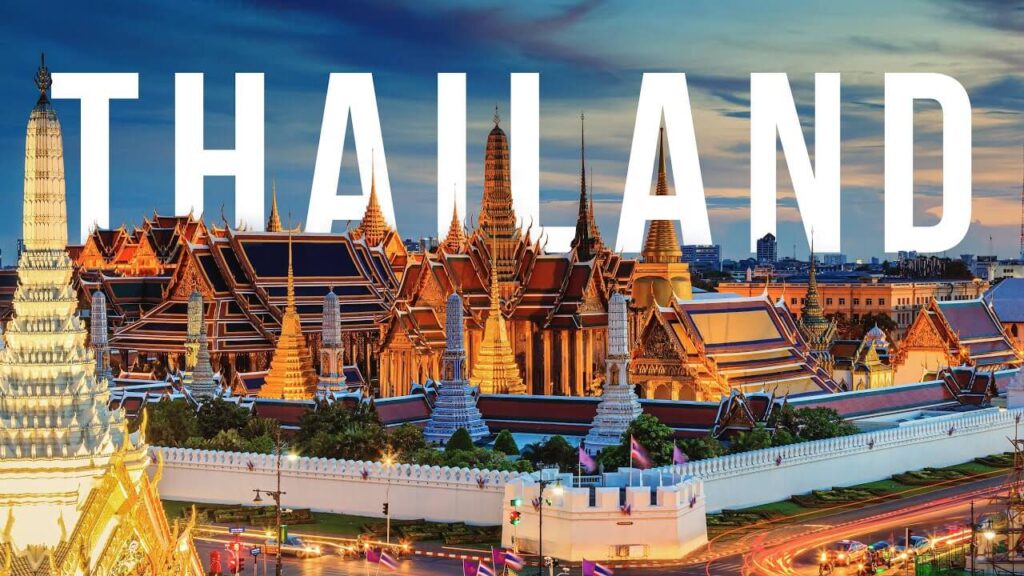
Everything You Need to Begin Your Thailand Journey with Clarity and Confidence
Thailand receives more foreign residents than almost any country in Southeast Asia — and the numbers are growing.
Americans, Europeans, Australians, Canadians, and an increasing number of Black American expats are discovering what the expat community in Thailand has known for decades: this country offers an extraordinary quality of life, a genuinely warm welcome for foreigners, a cost of living that makes Western salaries or savings go remarkably far, and a natural beauty that provides the backdrop for a life that looks genuinely different from anything possible back home.
Why Thailand — The Core Case
Cost of Living
A comfortable Thailand lifestyle — in any of the cities covered in this guide — costs approximately one-third to one-half of an equivalent lifestyle in the United States, United Kingdom, or Australia. A retiree living on Social Security income that feels tight in the US can live comfortably in Thailand. A digital nomad earning $3,000 per month remotely can live well in Chiang Mai or Hua Hin. The math changes lives.
Healthcare
World-class private hospitals at costs that are 20-40 percent of US equivalents. International physicians, accredited facilities, and a medical tourism industry that keeps quality high and prices competitive. Healthcare is one of Thailand’s strongest relocation arguments.
Culture and Quality of Life
The Thai concept of sanuk — making everything joyful — runs through daily life in ways that make the country genuinely pleasant to navigate. Buddhist temples, street food culture, traditional festivals, natural beauty across mountains, beaches, and jungles, and a pace of life that allows for the kind of presence and appreciation that Western work cultures systematically erode.
Food
Thai cuisine is widely considered one of the world’s great food cultures, and eating it fresh at source, prepared by people who grew up making it, is a daily experience that never entirely loses its novelty.
Community
Thailand hosts one of the world’s largest and most organized expat communities. Whatever your interests, background, or lifestyle preferences, a community of people in Thailand shares them and has probably already organized around them.
The Six Steps to Moving Abroad — Applied to Thailand
MOOD Travel Abroad’s six-step relocation framework applies with specific Thailand context:
• Step 1: Research and Vision — define what you want your Thailand life to look like. Use this guide series to understand the differences between Bangkok, Chiang Mai, Pattaya, Phuket, Hua Hin, and Koh Samui.
• Step 2: Visa Strategy — understand your visa pathway before anything else. Your visa determines your legal status, your banking options, and your ability to work if relevant. Work with a Thailand expert at moodtravelabroad.com/mood-experts.
• Step 3: Financial Planning — calculate your budget against local costs. Establish international banking (Wise, Revolut, Charles Schwab for Americans) before arriving. Understand the Baht and its relationship to your income currency.
• Step 4: Scouting Trip — visit before committing. A two-to-four week stay in your target city will answer questions that no guide can fully address. Thailand needs to be felt, not just researched.
• Step 5: Logistics and Transition — visa application, housing search, shipping versus storage decisions, school enrollment if applicable, healthcare insurance setup.
• Step 6: Arrival and Integration — connecting with the local expat community, finding your rhythms, building the life you moved for.
Practical Essentials for All Thailand Expats
Currency and Banking
The Thai Baht (THB) is the national currency, trading at approximately 35-36 to 1 USD. ATMs are widely available; Kasikorn Bank and Bangkok Bank ATMs are generally reliable and foreigner-friendly. Wise and Revolut minimize foreign exchange costs for regular transfers.
Language
Thai is a tonal language with its own script, meaningfully different from any Latin-alphabet language. Basic Thai phrases are deeply appreciated by locals. English is widely functional in expat areas of all major cities. Dedicated Thai language study opens the country significantly beyond the expat bubble.
Transportation
A motorbike or scooter is the workhorse of Thailand expat mobility — affordable to rent ($60-$120 per month), practical for city navigation. Grab operates in all major cities. Bangkok has an excellent BTS/MRT system. AirAsia, Nok Air, and Thai Airways serve domestic routes efficiently.
Internet and Connectivity
Thailand has reliable high-speed internet in urban areas and tourist zones. True Move, AIS, and DTAC are the primary operators, with 4G coverage nationwide and 5G in major cities. A Thai SIM card provides reliable mobile data for a few dollars per month.
A Note on Black Expat Life in Thailand
The MOOD Travel Abroad community includes a growing number of Black Americans and Black diaspora expats who have chosen Thailand as their relocation destination. The major expat hubs — Bangkok, Chiang Mai, Phuket, Pattaya — have diverse international communities where Black expats are established and visible. Urban Thailand is generally welcoming; rural areas may require more patience and cultural navigation.
Thailand, like any relocation destination, rewards intentional preparation and genuine cultural engagement. Black Americans who have built lives in Thailand consistently report that the experience is positive and enriching. The MOOD Travel Abroad community connects you with others who have made this journey before you. Find your Thailand expert at moodtravelabroad.com/mood-experts.
Ready to Make Thailand Your Home?
If reading this has sparked something in you — that quiet certainty that your life could look completely different — MOOD Travel Abroad is here to help you make it real. Our Thailand relocation experts have walked this path themselves and guided hundreds of intentional movers through every step, from visa strategy to neighborhood selection to building a life that actually fits.
Connect with a Thailand Relocation Expert
Visit: moodtravelabroad.com/mood-experts
Whether you’re planning a scouting trip, navigating visas, or ready to commit fully, we have the right expert to guide your journey.
Explore More Thailand Guides
Explore Thailand by City
Bangkok
- Bangkok — City Guide
- Bangkok — Cost of Living
- Bangkok — Best Neighborhoods
- Bangkok — Best Time to Visit
Chiang Mai
- Chiang Mai — City Guide
- Chiang Mai — Cost of Living
- Chiang Mai — Best Neighborhoods
- Chiang Mai — Best Time to Visit
Hua Hin
- Hua Hin — City Guide
- Hua Hin — Cost of Living
- Hua Hin — Best Neighborhoods
- Hua Hin — Best Time to Visit
Koh Samui
- Koh Samui — City Guide
- Koh Samui — Cost of Living
- Koh Samui — Best Neighborhoods
- Koh Samui — Best Time to Visit
Pattaya
- Pattaya — City Guide
- Pattaya — Cost of Living
- Pattaya — Best Neighborhoods
- Pattaya — Best Time to Visit
Phuket